
Welcome to Part 1 of this year’s six-part special series ‘Farming for Gumption’. You can listen to this newsletter on the substack app.
In each of the six essays, I will cover a different area of health, share the best science I have found, and offer reflections from my new life as a Volunteer at San Pablo Harbor and Farm.
This essay is about Stress, and the next five will be about Sleep, Nutrition, Exercise, Addiction, and Relationships.
But first, we have two exciting things going on!
👉🏽 Try out this gumption health readiness report and schedule time to inquire about the six-week program
📅 5 tickets left for the next Gumption Gathering on July 15th. Join us in San Francisco’s Marina District, where we’ll have tea, live music, and record Gumpcast conversation with Oshan Anan, founder of The World Folk Jam.
PART 1/6: Understanding the human stress response by staring at goats
I remember telling my mom as a seven-year-old that I felt like “something is chasing me and I have to keep running away from it”. She gasped and said I was “too young to feel that way.”
I remember thinking back to myself:
Too young to feel this way.
Was that how grown-ups felt like?
At 36 now, I know exactly what this feels like. I have been running for quite some time now. This is why I decided to come and volunteer on the farm. I got tired of chasing my tail into the quicksand achievements.
I wanted to be able to write this book, and if I were to write, I’d need my nervous system to be running on cool, flowing fluid. Over the past four years, I have developed a much healthier lifestyle that includes regular exercise, meditation, better food, and sleep to maintain that ability to create.
However, as long as I lived in the city and felt like I was struggling as an entrepreneur compared to everyone else with a full-time job, the stress still broke through my good habits and sent me spinning late nights, falling back into smoking, and isolating myself in my misery.
I could not imagine that a place might exist thirty minutes away, was an environment that could make me feel the exact opposite.
When I arrived at San Pablo Harbor, I could feel my nervous system shift into a lower gear. Dissolving into the pretty scenery. My engine slowed down as I drove through the winding oceanside road hugging the Bay, onto the green land of grass rolling down the hills, and was greeted by the Harbor Club House, with its white boats, colorful floating homes, and the vast open backdrop of the San Francisco Bay.
To the North is a vast open space, offering the hundreds-of-years-old Eucalyptus tree unhindered visions.
To the West, where the sun sets is Marin County, the Golden Gate Bridge, and mostly rich white people.
To the East, where the sun rises, is the smorgasbord of Berkley student activists, Oakland’s melting pot of middle and lower class, a few rich people in the hills, and great live music.
To the South, is San Francisco, the tale of two cities: one mega-rich stressed about what they have; and another homeless population buried under the stress of what they don’t have.
I was shown the garden, goat pen, and chicken coup that I would tend to, and then the bus turned into the cozy wooden cottage that I now call home.
Welcome to my home for the summer
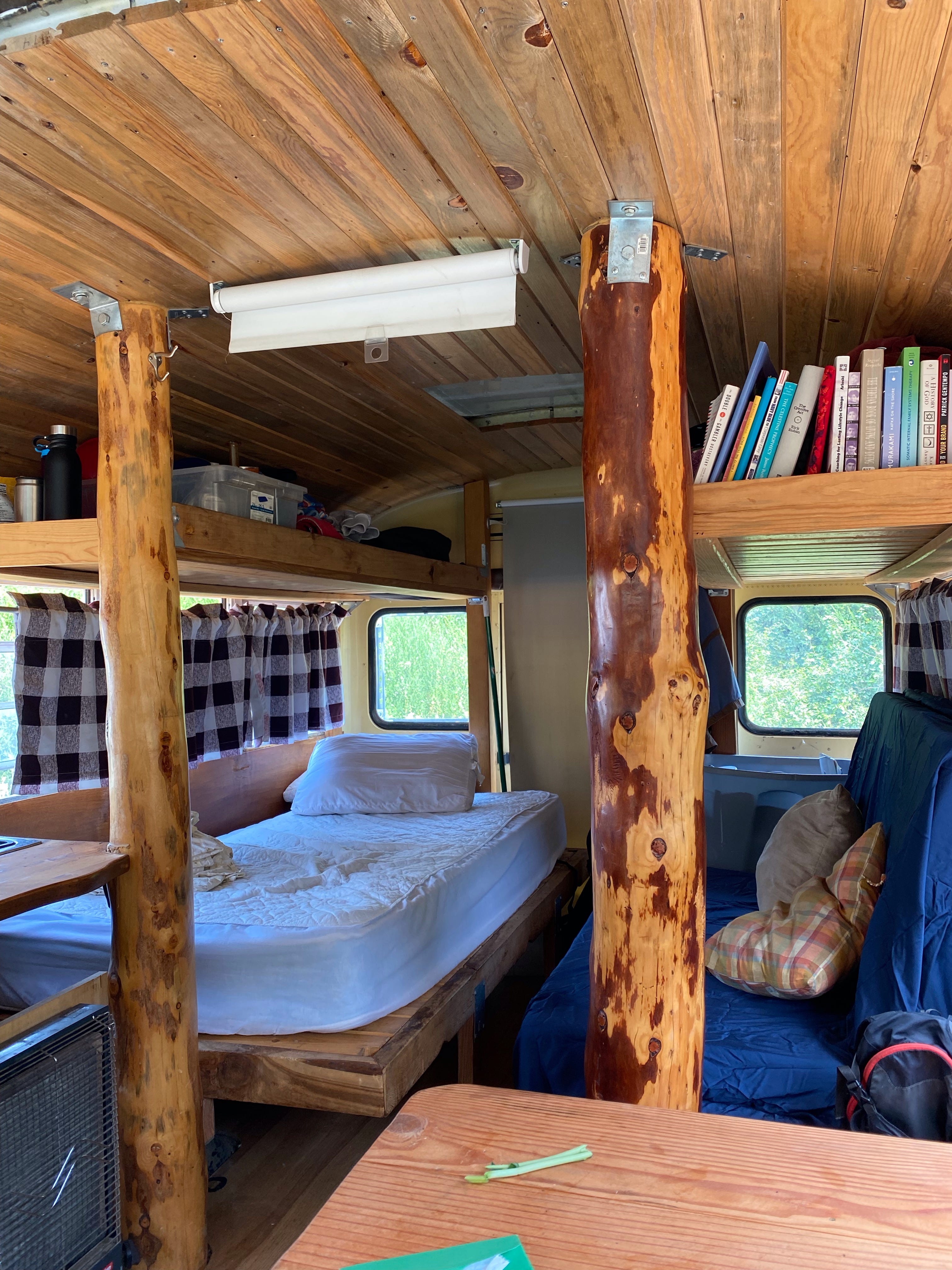
It is perhaps not a coincidence that I find myself with this amazing life opportunity to spend a summer at a farm, so close to nature and animals, while I write my new book about how we can stay healthy in a modern world geared towards sickness.
The book covers the emotional roots of behaviors that lead to poor health outcomes and incorporates everything I have found in a decade-long research and personal healing journey.
I find myself writing the chapter on Stress right now, and thereby researching many of my favorite books on the topic such as Gabor Mate’s When the Body Says No, Judson Brewer’s Unwinding Anxiety, and Robert Sapolsky’s classic lecture and book titled “Why Zebras don’t get ulcers”.
“This is the critical point of this book: if you are that zebra running for your life, or that lion sprinting for your meal, your body’s physiological response mechanisms are superbly adapted for dealing with such short-term physical emergencies.
A large body of evidence suggests that stress-related disease emerges, predominantly, out of the fact that we so often activate a physiological system that has evolved for responding to acute physical emergencies, but we turn it on for months on end, worrying about mortgages, relationships, and promotions.”
― Robert M. Sapolsky, Why Zebras Don't Get Ulcers: The Acclaimed Guide to Stress, Stress-Related Diseases, and Coping
The point is that the Zebra gets to relax after it escapes a lion. We humans, on the other hand, have carefully twisted our minds around endless to-do lists. Not to mention horrible bosses, stock prices, fashion, social media trends, relationships, heartbreak, war, news stories, text messages, complex social situations, Bitcoin, and every other dopamine-depleting trend in society.
In Unwinding Anxiety, Brewer breaks down each stress response that drives behaviors in a simple elegant format that summarizes most of what we know about human habits.
Trigger: Something happens
Behavior: We do something in response
Reward: We gain pleasure (or evade pain)
Our brains remember that.
I’ll need your brain to remember that too because we’ll return to it in a second.
But first…
Meet my Goats
As I write these words, I look outside the old squeaky windows of the bus and see a bunch of horned goats grazing the grass to my left.
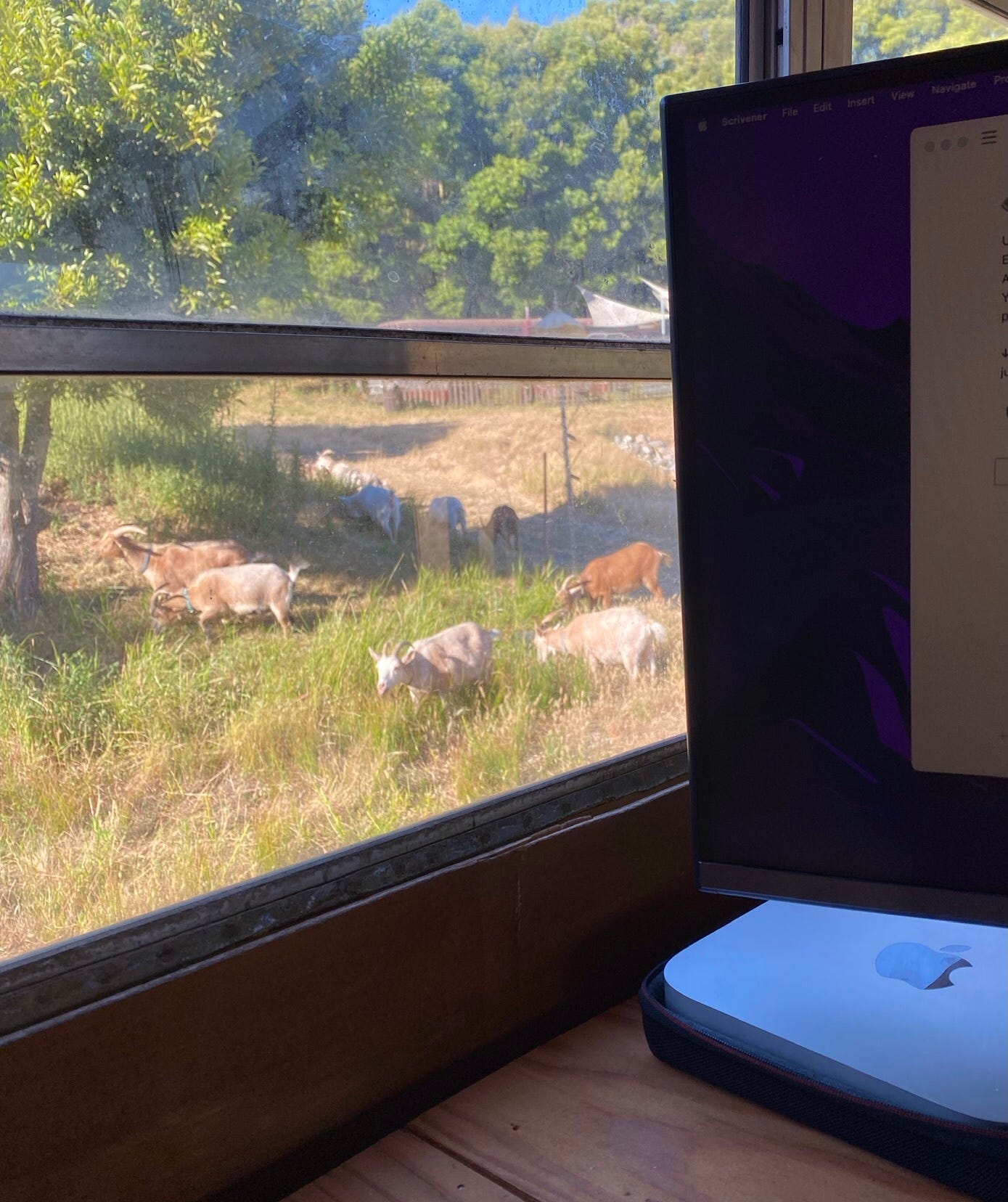
I watch the strong ones lock horns with each other, defend territory, ensure survival, bully the non-horned ones, and rebel against my commands.
These goats are perhaps the most time-consuming and stress-inducing of my responsibilities on the farm. I have to take them out to graze twice a day, amongst many other gardening, chicken, and build projects I have to complete.
Bringing the goats back into their pen is a real bitch sometimes.
There are always four or five of them that will lock me in a game of chess, snatching more play time out on the field, and taking away precious time from me to finish my shift and go back to writing and working on the gumption health program. Not to mention, relax!
Since I arrived here ten days ago, I have been trying to figure out how best to bring them back into the pen.
Armed with all the science about behavior that I was reading and writing about, I decided to put it all into action.
Watch out goats, here comes evidence-based goat habit-hacking.
Act 1: Pleasure and Pain
The farm manager suggested the two options of Carrot and Stick, or in my case, the goat feed and the squirt gun.
What I learned this week is that neither works to change behavior permanently.
This is a lesson I had already learned while running wellness and behavioral health programs, but my agony with the goats was a good reminder of how short-lived pain/pleasure short-term rewards are.
The first few shifts comprised of me squirting at these goats like a game of whack-a-mole or Call of Duty. The water gun keeps them running away from me, but then they run in the other direction, getting further away from the pain.
The pain of the squirt gun works well when they have completely strayed into the restaurant or the parking lot and I need to push them out of there.
Trigger: Goats see water gun
Behavior: Goats run away
Reward: Goats Avoid Squirt gun
This was very short-lived. Yes, they responded to my squirt gun pain trigger, but they were not behaving how I wanted them to. Quite the contrary.
First of all, goats scared of the gun ran away from me, not towards me. This makes it impossible to guide them somewhere. Instead, I scatter them everywhere.
Secondly, the true rebels (whom I admire and hate) get pretty desensitized to the squirt gun if I use it over and over again in a fit of anger and frustration. I might have done that once or twice.
Don’t judge me. These goats are pretty fucking naughty.
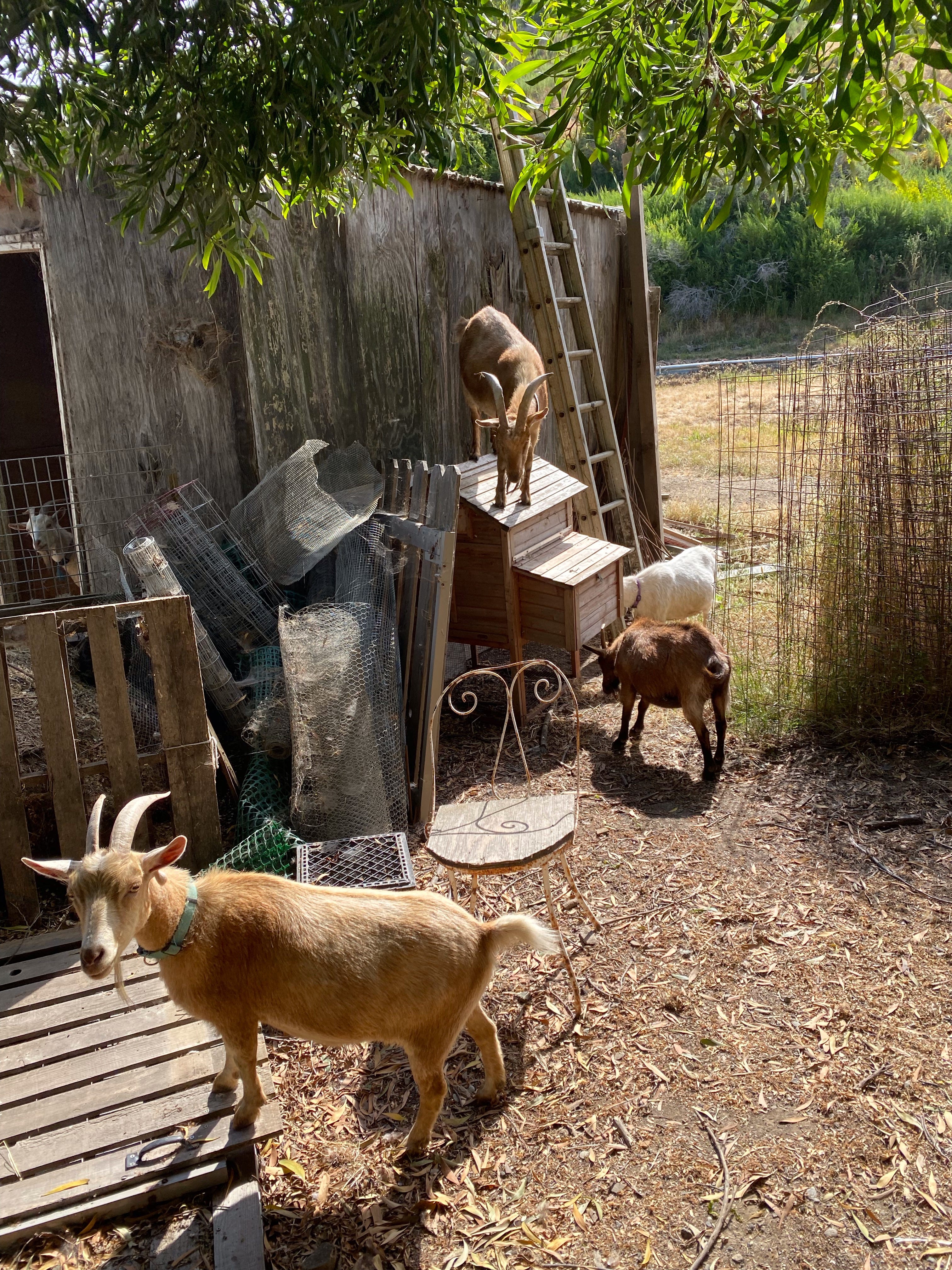
Being less sensitive to an old trigger happens due to something called downregulation. It is a common feature shared by animal and human body receptors in response to a repeated trigger that gets boring.
Our receptors stop being responsive to that stimulus eventually. Our brains decide to shut it out like we shut out the world when we sleep. Things lose their novelty, and unless they generate a Coyote-level stress response, we stop registering them and so old behaviors come back.
Later that week, I learned about pleasure.
I figured that a certain chime sound made by knocking on the goats’ metal bucket brings them running back home for their favorite goat feed snack. I was at first pleased to see flocks of them rush into the pen, following my magical bell. It’s working!
However, the result of this approach proved treacherous. When I am holding the feed in my hands, these goats will corner me in the pen, and climb on my body and on the fence to reach for the food. Driven by the dopamine of food, the response now looked like this:
Trigger: See food
Behavior: Get as much food quickly, before others
Reward: Eat enough of the food
I was terrified of these hunger games that I had started. The goats stopped seeing me as a human and only saw the food in my hands. They were under the spell of dopamine. They stopped caring about where their horns went.
It was clear that the Pavlovian pleasure approach was not going to work out long-term either because
a) it was dangerous since they have horns and jump all over me if the food is in my hands and
b) it was still not quite the behavior I wanted them to do. Some of them would eat from my hand and if I did not trap them immediately in the pen, they went back out into the field.
By the end of week 1, I was quite deflated and frustrated by these goats. I started blaming them for taking away from my writing time and held a grudge that a feeling of defeat around their pen.
My adrenaline was rising. These fucking goats.
That is when I slowed things down and started observing (rather than trying to control) the goats. I still wanted to control their behavior, but I had become so helpless that I had no redemption outside of paying attention to them, and understanding what I was missing.
The answer to my goat worries soon started to show me itself.
Act 2: Understanding the Stress Response
As I braced myself to return the goats to the pen the next morning, I had blocked off an hour, practiced a new strategy with the feed, loaded my water squirt gun, and walked out on the uneven field ready to jam.

That’s when the most miraculous thing happened.
Without missing a beat, all eighteen goats lined up in the middle of the field in a straight perfect line, and within a whoosh of a second, they were all deeply tucked in the pen, begging me to close the gate behind them.
Bewildered by this scene, and lost for any way to understand it, I stared at them in disbelief, mustering a wide silly smile on my face.
How could this be? I didn’t even lift a finger. I had barely been on the field for a few minutes. Most of them didn’t even see me.
A family came wandering from behind the garden, with an old white-bearded man and his two grandkids. I looked at them, still with a silly smile on my face. “We must have scared them,” he said. I was relieved that someone else saw this scene and that I was not crazy. However, I knew that he was wrong. People are around the goats all the time, they never zap themselves back to the pen.
One of the grandkids came running to us with the answer.
“Coyote! Coyote! Grandpa! We saw a Coyote!”
Mystery solved. A Stressor event jolted the goats back into the pen.
That is how powerful the stress response is. It can jolt an organism and those around it, into an instant, sharp, and compulsive behavior.
If only that Coyote can come around twice a day and put the goats back in the pen so effectively for me.
Here’s what you need to know about the Human Stress Response:
Sopolsky’s description of the human stress response started playing back in my head. Here is a summary of what we know about the science of Stress as described by the latest evidence in the field.
When the world triggers us with a stressor, which it always will, the Brain tells the body to tense up and get ready for “fight or flight” through both nerves (the sympathetic nervous system) and hormones (adrenaline, cortisol, and glucocorticoids).
These changes shift the body away from luxury projects such as cell growth, repair projects, complex immunity protein synthesis, and so on, and use its energy more for running, seeing, breathing, fighting, and escaping.
For the vast majority of beasts on this planet, stress is about a short-term crisis, after which it’s either over with or you’re over with. When we sit around and worry about stressful things, we turn on the same physiological responses—but they are potentially a disaster when provoked chronically.
The stress response goes on for decades unhindered, our bodies stop healing, our hearts falter, our immune system weakens, our sleep is deprived, our brains feel exhausted, and our energetic and hormonal balances go out of whack. Stress does not cause disease, but it predisposes us to many lethal ones.
That got me thinking about the work that I do with people dealing with work-related stress, and how our nervous systems jolt us into all sorts of good and bad behaviors through these strong emotions.
What system can I build, to help relax the goats’ nervous systems around the pen, than in the areas where I do not want them to be?
And what can we all learn about health behaviors, from how these goats behave naturally, without the added layers that we have gained from our Prefrontal cortex?
These questions laid the foundations for my latest strategy.
Act 3: Compassion as a herder of better habits
The little scientific fact I mentioned above about our Brain being in charge of the human stress response is our biggest and only source of hope when it comes to healthy aging and the prevention of disease.
Chances are, we will not reverse the stressors of the industrial world, or cancel the news or social media stress, or ban advertising that makes us feel poor and ugly.
Our saving grace lies in our ability to stop the brain from producing high levels of stress hormones all the time in an unproportionate way to the stress and trigger.
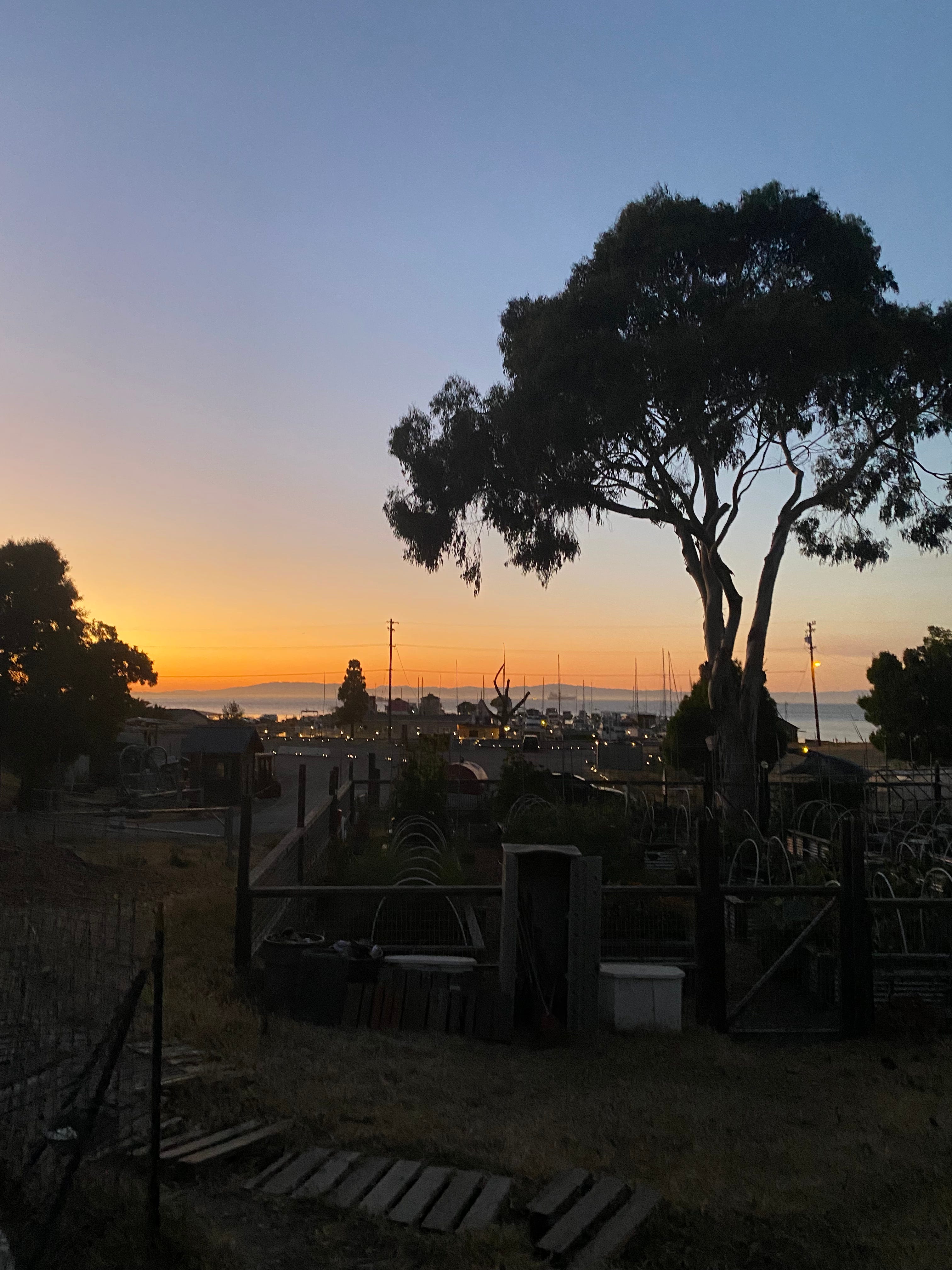
This dawned upon me on a sunset walk down the hill, after a long day of work, listening to Why Zebras Don’t Get Ulcers on my phone, and riddled with stress about writing progress, my health coaching business, my social life, Palestine, the elections and my drama with the goats.
I walked by the pen now serving like a goat spa with perfect dusk weather and a gorgeous view.
I spotted a goat by the fence munching on hay, with its eyes closed, and its lips widened just enough to muster a gentle smile. It meditated, slowly chewing from side to side, closing its eyes, and traveling where I imagine Zen monks go in their minds.
I envied the fellah. This goat and I shared the same environment, why was I not as relaxed as this guy is right now? I have food, I have a home, and I have the same sunset.
The goat opened its slit rectangular eyes and stared right back at me. In that moment I realized that I was more like this goat that I am staring at, rather than the screen I am writing this blog post on.
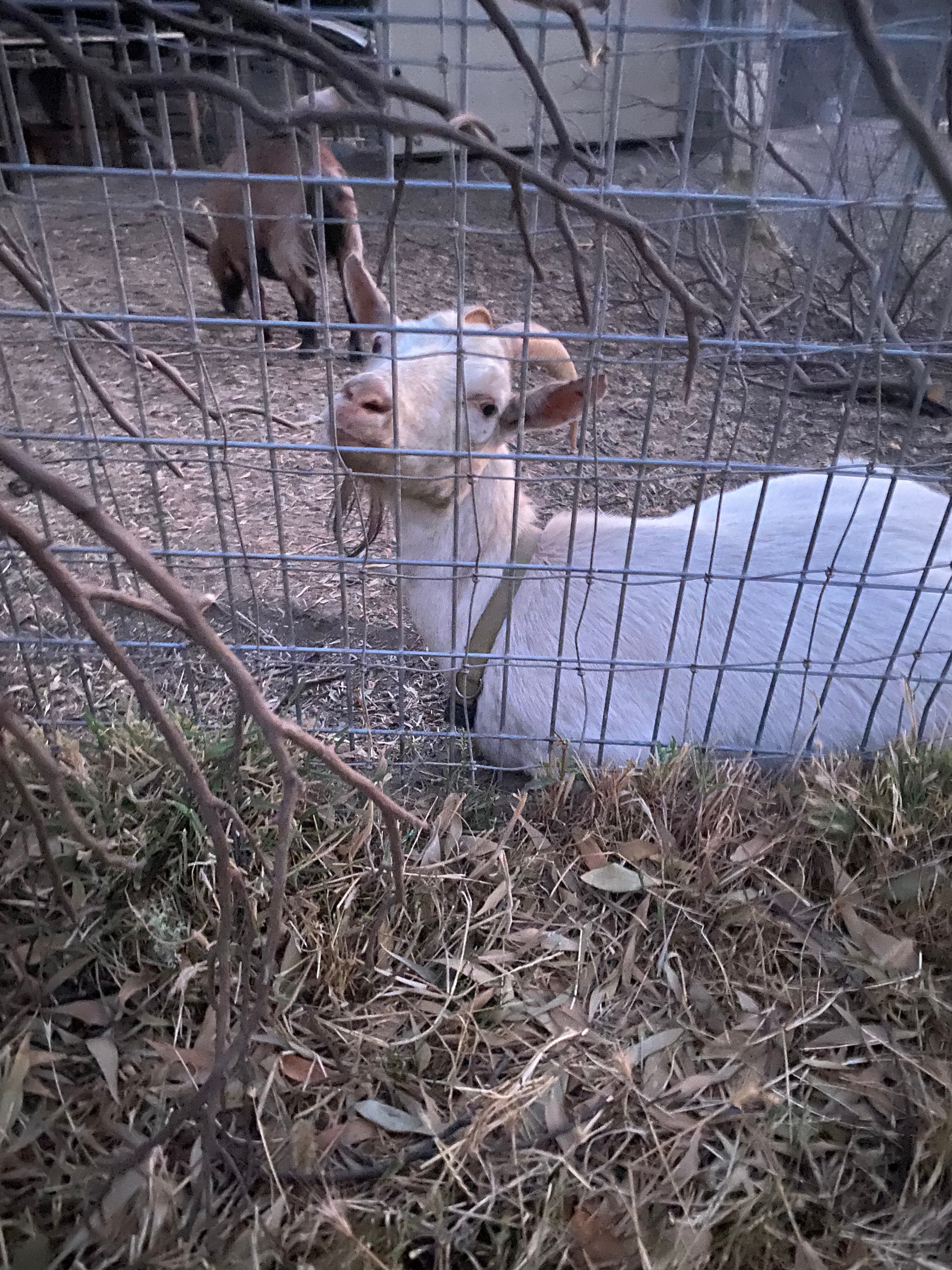
I heard a banging sound on the other side of the goat pen. I looked across and realized it was not so rosy for all the goats.
A small brown non-horned goat, Cassie, was trying to get into one of the feeding stations, but a white goat came in between her and the food and rammed her in the belly with his horns.
Motherfucker! I ran inside and scolded him for doing that, and then it dawned upon me…These eighteen goats have different personalities, pecking order, and a clear hierarchy.
Here’s what research tells us about the role of personality and psychology on the human stress response:
Scientific research clearly outlines a propensity of certain personalities to be more prone to larger and more frequent stress responses to others, even if the stressor is identical. This is true even for genetically identical twins.
This means that by addressing certain aspects of our personality (which live in our brains), then we can modify and reduce the toll of the stress response by choosing not to treat the work deadline like a lion threatening our existence.
Gabor Mate talks about the four human characteristics of a “Stress Prone Persona”.
These are people that:
1- Find it hard to say No
2- Are unable to express healthy anger
3- Have an overidentification with a sense of duty or responsibility
4- Compulsively put others’ needs before their own.
Sound familiar?
These patterns are highly associated with our brains deciding to flush our system with stress hormones, without allowing our anxieties to relax and our bodies to recover. The great news here is that these four factors are completely reversible.
I now believe that personality is the holy grail towards behaviors and long-lasting lifestyle change, that is the whole science behind the gumption health program.
If you’re in the Bay Area and interested in learning more about the health program set up some time and get your gumption report here.
When I saw that little goat get bullied, I finally learned why some goats are so ready to get back into the pen on their own, and why others wanted to stay out as long as possible.
These ‘rebel goats’ were not trying to defy me or undermine my authority. They just hated being in there with the bully alpha goats in the pen.
In this case, the goat’s stress response looked like this:
Trigger: Cassie sees Alpha goats in the pen
Behavior: Stays out as long as possible during feeding time
Reward: Enjoy two extra hours of stress-free grazing
In this case, Cassie the goat was finding a stressor inside the pen and therefore wanted to be outside of it. In the case of the Coyote, the stressor was outside the pen, and so all of them were naturally happy to be safe in the pen.
That was when I realized my role as their herder: To help them feel the opposite of how the Coyote made them feel. If so then I can excite them enough to follow me into the pen.
In closing, the strategy of compassionate inquiry
All these realizations made me understand that I needed different approaches with different goats, and now I finally have a strategy that works.
When I want to herd the goats now what I do is:
1- Go where the alpha goats are and start rhythmically clapping to draw their attention.
2- Once the brave ones get closer to me, I show them a little bit of feed. The first one to get to me is the only one that gets the reward.
3- I walk to the pen dragging the highly motivated alpha goat and about ten other goats that follow him.
4- I go back out for the naysayers with the gun. Without the protection of the alpha ones, they are more receptive and go back in the pen.
5- I go back for Cassie and her two children.
They’re lways the last ones. I get close to them and kneel and tap on their heads and bellies. I shower them with love and care and perhaps offer a little treat bribe. Magically, they want to follow me. We get to the pen, give them some more treats, and pat them on their heads, and they say goodbye and walk themselves in.
If you enjoyed this, I want to know: What resonates from how these goats behave to your own lifestyle and health behaviors? Let me know if you made that connection and what thoughts come up for you
Next Sunday I’ll share the Gumption Stress Worksheet covering a summary of Neuropsychology, proven lifestyle habits that change it, and ways to measure Stress in modern times.
👉🏽 Try out this gumption health readiness report and schedule time to inquire about the six-week program.
📅 5 tickets left for the next Gumption Gathering on July 15th.
very sweet story Omar.
Autonomic self-regulation has been my life's work for 4 decades, and i too wrote a book. You have a delightful way of pulling that age-old information together into a compelling teaching. Enjoyed the read. i am glad you found yourself such an ideal situation and budding friendships with your goat tribe, and wish you a fun SF event.
Love the bus! And the bookshelf ❤️
Goats are awesome and are completely unpredictable- good luck.